
I started my 2025 in a truly joyful manner; I was pregnant. I ended my February recovering from a miscarriage. And you know what? I want to talk about it. Living through a miscarriage shouldn’t be a secret.
I know that some of you reading may disagree completely. You may believe it is an intimate medical situation that should be kept to yourself. Perhaps you think a perhaps a trimester one miscarriage isn’t a real loss. Or maybe you believe that talking about a miscarriage is ‘attention seeking’ – we can all remember the negative press Megan Markle received for discussing her miscarriage. Well, I’m not sorry to say readers – I believe that all of those reasons contribute to miscarriages being seen as a taboo subject and are doing far more harm than good.
More and more people are opening up about their experiences with miscarriages, either during or after. Every person will have a different reason as to why – a coping mechanism, talking therapy, to break the news, to broach professional conversations. However, I think a lot of us are choosing to discuss these experiences because we don’t want to suffer in silence like the women who came before us. Millennials and Gen Z’s are a much more open bunch when it comes to self-expression. Through lived experience, culture, and society, we’ve seen the damage keeping feelings and mental health bottled can cause, and we are not letting that happen to us.
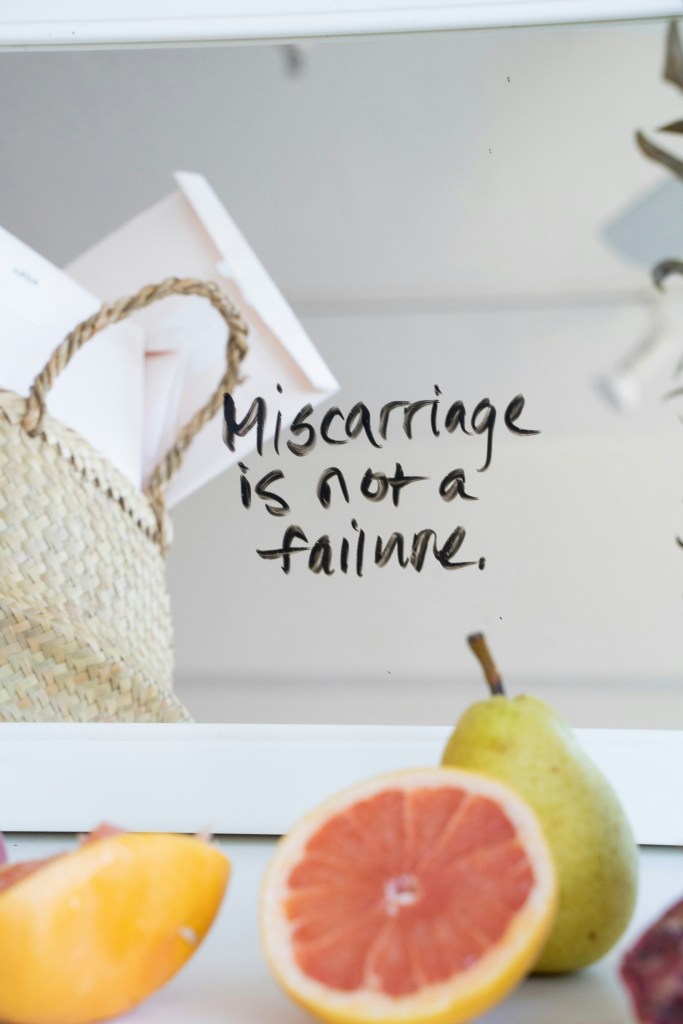
Did you know that 1 in 4 women will experience a miscarriage in their life? And at least 1 in 8 pregnancies end in miscarriage. Think of all the people you know who identify as a woman; statistically, 25% of them who have gone through a miscarriage. That statistic doesn’t lean towards rareness or secrecy; that’s a statistic of commonality and community. Think of the last one hundred years; people’s views towards birth and the openness about it has certainly increased, but discussion of miscarriage is certainly still in the dark ages.
It’s not a dirty secret. It’s rarely anyone’s fault. It’s not a whisper or something to gossip about. It’s a common medical phenomenon that involves physical pain, mental trauma, and bereavement.
There was no rhyme or reason for my trimester one miscarriage. Sure, I have endometriosis and PCOS, but both of these are incredibly well managed with surgery and daily medication. And yet, I miscarried at seven weeks and five days.
My husband and I had found out I was pregnant on his 30th birthday. I had already been feeling fatigued and nauseous with no period for a few weeks, so we were hoping for a positive outcome. It was a truly magical moment when I ran upstairs to tell him, thinking all of our anxiety and infertility issues could be behind us. As the weeks went on, my nausea turned into morning sickness and the pregnancy aches were kicking in.
We were away in Liverpool celebrating my husband’s birthday when I noticed the tiniest amount of blood when wiping. If you are someone who has periods, it reminded me of that pre-period, light spotting that happens. A light pink tint appears, barely noticeable. I didn’t think too much of it; very light bleeding can be normal in pregnancy. During that evening, I noticed about five minutes of stomach twinges, and then nothing else out of the norm. I went on feeling sick and tired and chucking up my breakfast.
Three days later, I gave my husband a sleepy kiss as he got ready for golf, and I said, “I had a nightmare that I had a miscarriage.” He asked me how I felt, I said still very sick, and we just shrugged it off. A few hours later, I then woke up with intense stomach aches, ones that felt like endometriosis, along with the urge to be sick. Waving them off as sickness pains, I did my morning routine of chundering like a lady, before going to have a wee. As a wiped, I knew something was wrong. That’s when I looked, and my entire world collapsed around me.
The rest of the day was a blur. Bleeding on the floor calling my husband and then 111. Rushing into an Uber layered in pads because it would be quicker than an ambulance and quicker than my husband coming to get me. Being ushered into gynaecology. Sitting there as everything left my body with pangs of physical agony and true sadness. Doctors checking my cervix, which was indeed open. Being dumped with options of blood tests and scans and finally being told “it’s over, there shouldn’t be anything left now”. What I remember viscerally is my husband finally being allowed to get me, and the time-bending, shuddering hold we had on each other in the car. We both felt shattered and upset. We both felt lonely and worried for each other. I felt guilty and damaged. And that is the reason I want to talk about it – having a miscarriage.

The emptiness, guilt, worry and loneliness was something I had never experienced before. The physical emptiness, of something being there and was no more, and the mental loneliness of “does anyone else know what I am going through?” The guilt, feeling that it was my fault that this has happened, it’s my fault that our dream is over. I had no reason to believe this. But it was my body that let us down. And the worry – not for me, but for my husband. He was taking such good care of me, was he neglecting himself? Was he allowing himself to feel and to grieve?
We had let a few people know of the pregnancy beforehand, namely close friends and work colleagues, as my sickness was becoming hard to hide. So we actually told the first group of people less than twenty-four hours after entering hospital. I then reached out to my parents because sometimes, only a talk with them can help heal parts of me. Receiving a few genuine messages of bereavement and sadness really helped to ground me during this time. I was worried that, in some cases, I wouldn’t have been taken seriously as going through something tangible and real. But I didn’t have to worry about that at all.
With this in mind, I reached out to the rest of my support network. Friends and family members, additional colleagues, online portals. Mainly so I could explain my weeklong absence, but also to share the grief. It wasn’t anyone else’s to hold, but by speaking it out loud to other people who wanted to listen, I felt the pain and sadness folding in like origami. What was originally a huge piece of paper taking over my vision, was now a bunch of paper stars I could put in my pocket and carry with me. What was initially painful, slowly became cathartic, became a release. People with shared lived experience came out, spoke to me, gave me advice and warmth. It’s a beautiful, tender, and melancholy community. And yet, so hopeful.
I’m aware that talking about a miscarriage may not work for everyone. It might be too painful to address straight away. You may not know what words to use, what to say. If you cannot let it out to anyone, that’s okay. Just know you always should have the choice to speak it to the world and get the support you need.
That’s the reason I want to talk about it. Because talking about it saved me. And it can save someone else too.
If you are living through something similar, have been affected by the words in the post, or simply want to know more about support out there, I’d really suggest looking at Tommy’s. They are a wonderful charity for anything pregnancy and baby loss.
Rosie x


 rosie abigail
Leave a reply to April Cancel reply